The Complete Guide to Blood Sugar Spikes What Causes Them + How to Stop Them (Daytime and Overnight)
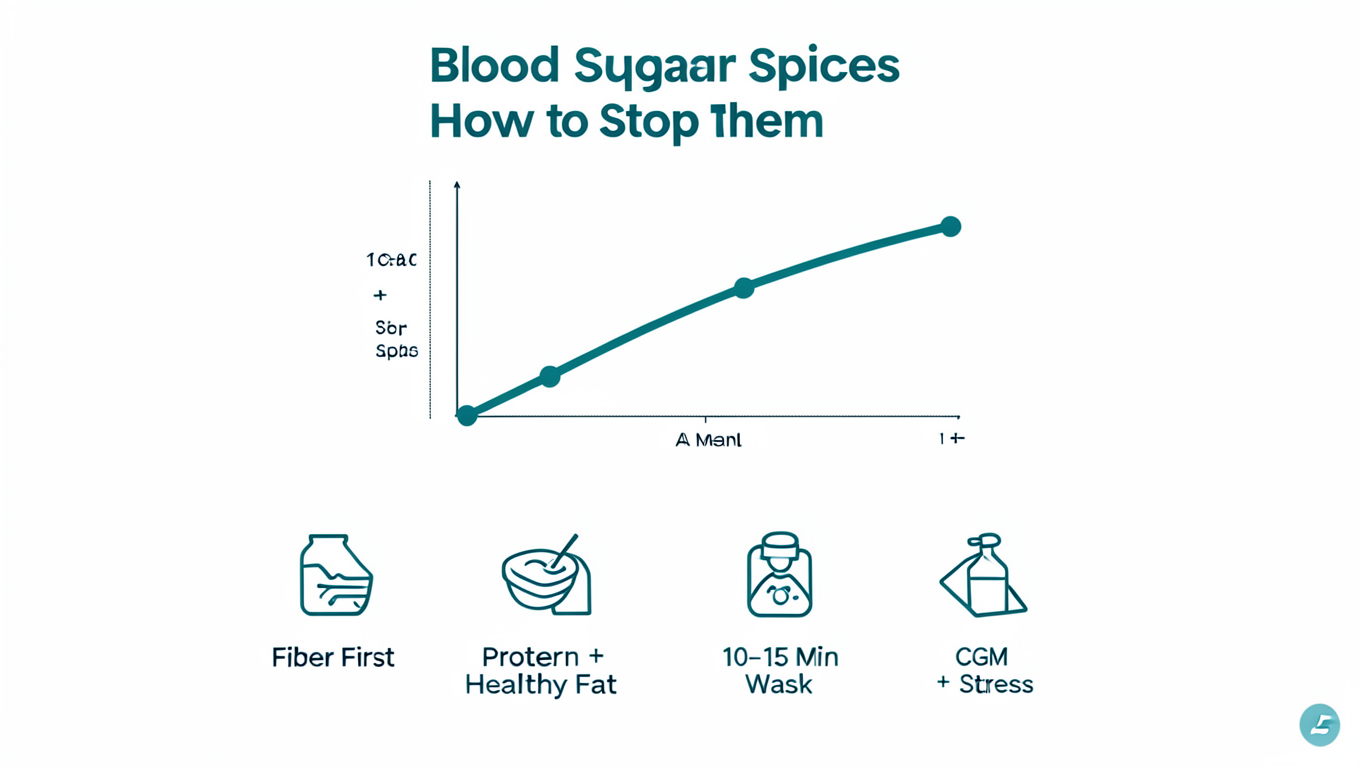 If you’ve ever asked, **“Why does my blood sugar spike after meals?”** or wondered why your glucose climbs even when you “did everything right,” you’re not alone. Blood sugar spikes are common in **type 1, type 2, prediabetes**, and even in people without diabetes—especially with modern eating patterns, stress, and sleep disruption.
The encouraging part is this: spikes are not random. They usually follow patterns you can learn, predict, and smooth out. You don’t need perfection or flat lines. You need a system that lowers the *size* and *frequency* of sharp rises, improves recovery time, and makes your day feel steadier.
This guide breaks down:
* The most common causes of **post-meal glucose spikes**
* Why **nighttime spikes** happen (and how to reduce them)
* Practical tools: meal order, food swaps, walking, CGM strategy
* Insulin timing concepts like **pre-bolus** (for those who use insulin)
* A simple “one-change-at-a-time” method that helps you find what works
> **Medical note:** This is educational content, not medical advice. If you use insulin or glucose-lowering medication, changes in food/activity can increase the risk of **hypoglycemia**. Work with your diabetes team for medication adjustments.
—
## What Is a Blood Sugar Spike?
A “spike” usually refers to a **rapid rise in glucose** after eating or during certain hormonal moments (like early morning). On a CGM, it’s the steep climb that happens quickly and can overshoot your target range.
Spikes matter because:
* They can make you feel tired, thirsty, foggy, or irritable
* They often lead to a “crash” later (especially if insulin or meds overshoot)
* Over time, frequent high peaks can make glucose management harder
But spikes also carry information. They’re feedback. When you learn what triggers yours, you can build routines that reduce them without living on a restrictive plan.
—
## Why Blood Sugar Spikes After Meals
Most post-meal spikes come down to a few repeatable causes:
### 1) Fast-digesting carbs (especially “naked carbs”)
When carbs arrive quickly and there’s **minimal fiber, protein, or fat** to slow them down, glucose rises rapidly.
Common fast-spike foods:
* white bread, white rice, many cereals
* pastries, cookies, sweets
* fruit juice, soda, sweet coffee drinks
* large portions of starchy carbs without protein
This doesn’t mean “carbs are bad.” It means **carb type + portion + pairing** matters.
### 2) Low fiber (or fiber comes too late)
Fiber slows digestion and reduces the speed glucose enters the bloodstream. Meals with few vegetables, beans, lentils, or whole grains often spike more.
### 3) Meal composition: high-carb + low-protein
Protein helps blunt spikes by slowing gastric emptying and improving satiety. If a meal is mostly carbs, spikes can be sharper.
### 4) Timing mismatch with medication or insulin
If you use insulin or certain diabetes medications, a timing mismatch can cause a spike even with “good” foods. If glucose rises faster than the medication kicks in, you’ll see a steep curve.
### 5) Stress hormones
Stress, anxiety, pain, and even rushing through meals can increase hormones like cortisol and adrenaline. These can push glucose upward and make spikes larger.
### 6) Sleep deprivation
Poor sleep increases insulin resistance and cravings, and it can amplify glucose swings the next day.
### 7) Hidden sugars and “healthy” traps
Some “healthy” products still spike:
* flavored yogurt
* granola
* protein bars with syrups
* smoothies with lots of fruit and little protein/fat
* “low-fat” snacks that replace fat with sugar
—
## The Biggest Mistake: Trying to Fix Everything at Once
When people try to stop spikes, they often overhaul everything: no carbs, intense workouts, new supplements, and major meal changes—all in one week.
That usually fails because:
* you don’t know what helped (or hurt)
* it’s too hard to sustain
* it can create lows if you’re on medication
The better approach is **one variable at a time**—and your meter/CGM becomes the compass.
—
# How to Stop Blood Sugar Spikes: The Most Effective Levers
## 1) Meal sequencing: “fiber first, carbs last”
One of the simplest and most effective strategies is changing the **order** you eat your food.
Try this order:
1. **Non-starchy vegetables / salad** (fiber first)
2. **Protein + healthy fat** (protein first approach)
3. **Starches and sweets last** (carbs last)
Why it works: fiber and protein slow gastric emptying and reduce how fast glucose hits your bloodstream. Many people see a smoother curve without changing the ingredients—just the order.
**Example:**
Instead of eating rice first → eat salad + chicken first, then rice.
## 2) Pair carbs with protein, fiber, and fat
Think in combinations, not bans.
Better carb pairings:
* fruit + nuts or Greek yogurt
* oats + chia + nut butter
* rice + beans/lentils + vegetables
* toast + eggs + avocado
* pasta + chicken + big salad
A helpful rule: **Don’t eat carbs alone if you’re spike-prone.**
## 3) Choose “slow carbs” more often
These carbs tend to be steadier for many people:
* beans and lentils
* oats and oat bran
* berries
* whole grains (in sensible portions)
* non-starchy vegetables
* some higher-fiber breads
Fast carbs aren’t “forbidden,” but if they’re causing repeated spikes, swap them more often.
## 4) Portion and pace matter more than people think
Even healthy carbs can spike if the portion is large or eaten quickly.
Two easy tests:
* Reduce the carb portion by **25%** and compare the curve.
* Eat slower (extend the meal by 10 minutes) and compare the curve.
## 5) Add a short walk after meals
Yes—**walking after meals** often reduces post-meal spikes.
Try:
* 10–15 minutes after your biggest meal
* easy pace is fine
* consistency beats intensity
This works because muscles use glucose during movement, and insulin sensitivity improves.
## 6) Use “micro-movements” if you can’t walk
If walking isn’t possible:
* light housework
* marching in place
* gentle stationary cycling
* a few minutes of stairs (if safe)
Even 5–10 minutes can help smooth a spike.
## 7) Consider vinegar “support” carefully
Some people use a small amount of vinegar in water or dressing with meals to blunt spikes. It can help some, but it’s not essential—and it’s not for everyone (reflux, ulcers, sensitive stomach).
If you try it:
* use it with a meal (not on an empty stomach)
* keep it modest
* stop if it irritates your stomach or teeth
—
# Why Blood Sugar Spikes Overnight
Night spikes can be frustrating because you’re not eating—so it feels unfair. The common causes usually fall into these categories:
## 1) Dawn phenomenon
In the early morning hours, the body releases hormones that help you wake up (cortisol, growth hormone, adrenaline). These can increase glucose production by the liver.
Result: glucose rises between ~3–8 a.m. even without food.
## 2) Late, high-fat dinners
High-fat meals (pizza, fried foods, heavy creamy meals) can cause **delayed spikes** because fat slows digestion. You might look “fine” at 2 hours, then spike at 4–6 hours.
## 3) Alcohol effects
Alcohol can cause delayed lows in some people and rebound highs in others depending on what you drink, what you ate, and your medication.
## 4) Stress and poor sleep
Stress and sleep disruption increase cortisol and can make glucose harder to control overnight.
## 5) Medication timing or basal needs
If you use insulin (or certain meds), overnight patterns can reflect basal dose/timing needs. This is a clinical adjustment—work with your team.
—
## How to Avoid Nighttime Blood Sugar Spikes
### Step 1: Identify which night pattern you have
Use your CGM or fingersticks to see:
* Are you stable until 3 a.m. then rise? (often dawn phenomenon)
* Do you rise 2–5 hours after dinner? (often meal-related delay)
* Are you dropping then rebounding? (could be overtreatment or dose mismatch)
### Step 2: Try the simplest fixes first
* Eat dinner earlier (even 60–90 minutes earlier can help)
* Make dinner lower-fat or split “fat-heavy” meals into smaller portions
* Add a gentle 10-minute walk after dinner
* Avoid sugary desserts close to bedtime
* Prioritize consistent sleep timing
### Step 3: Build a “steady dinner plate”
A spike-resistant dinner often looks like:
* protein (fish/chicken/tofu/eggs/beans)
* lots of non-starchy veggies
* moderate carbs (beans/lentils, small grain portion)
* healthy fat in normal amounts (not “fat bomb”)
### Step 4: If you use insulin, discuss night patterns with your team
Night corrections, basal rates, pre-bolus timing, or split dosing are individualized. Don’t guess. Use your data and ask for adjustments.
—
# CGM Spike Prevention Tips That Actually Help
A CGM is more than a number—it’s a pattern tool.
## 1) Watch the first 90 minutes after meals
For many people, the “shape” of the spike is decided early. If you can blunt the first rise, the peak tends to be lower.
## 2) Use rise-rate alerts (if available)
Set an alert for a rapid rise so you can:
* take a short walk
* pause extra snacking
* note what meal caused it
## 3) Compare meals like experiments
Pick one “baseline meal” and repeat it 2–3 times.
Then change only one variable:
* add more veggies
* swap rice for lentils
* add a walk
* change meal order
This is the fastest way to learn what works.
## 4) Track “peak and recovery time”
Instead of obsessing over one number, track:
* how high did it peak?
* how long did it stay high?
* how fast did it come down?
Shorter high time is a big win.
—
# If You Use Insulin: Pre-Bolus and High-Fat Meals (Safety First)
If you use rapid-acting insulin, you may hear about **pre-bolusing** (taking insulin before eating) to match insulin action to glucose rise.
### Why pre-bolus can reduce spikes
Many meals raise glucose quickly, but insulin takes time to start working. Pre-bolusing helps align the curves.
### Safety rules (very important)
* Timing depends on your insulin type, your current glucose, and your meal.
* Pre-bolusing can increase low risk if you get delayed eating or smaller portions.
* Always work with your diabetes team to choose a safe approach.
### High-fat meals may need different strategies
High-fat meals can cause delayed glucose rises. Some people use strategies like split dosing (part now, part later), but this must be individualized and done safely with guidance.
If you’re seeing delayed spikes after pizza, fast food, or creamy meals, it’s not “random.” It’s often fat-slowed digestion.
—
# The Best Foods to Prevent Blood Sugar Spikes
If you want a practical grocery list, start here:
**Fiber anchors**
* beans, lentils, chickpeas
* chia seeds, flaxseed
* oats/oat bran
* leafy greens and non-starchy vegetables
**Protein anchors**
* eggs
* Greek yogurt (unsweetened)
* fish/seafood
* chicken/turkey
* tofu/tempeh
* cottage cheese (if tolerated)
**Healthy fats**
* nuts and seeds
* avocado
* olive oil
**Lower-spike fruit**
* berries
* citrus (whole, not juice)
* apples (paired with nut butter)
The theme: build meals around **fiber + protein** and use carbs as a controlled addition—not the whole plate.
—
# A Simple 7-Step Plan to Start This Week
If you want a clean action plan, do this:
1. Pick one meal that spikes you often (breakfast for many people).
2. Eat **vegetables or fiber first**, then protein, then carbs.
3. Add **one protein** if it’s missing.
4. Reduce the carb portion by **25%** (test it).
5. Walk **10 minutes** after the meal.
6. Watch CGM for 90 minutes and note peak + recovery.
7. Repeat 2–3 times, then adjust one variable.
This “one-meal experiment” is usually more powerful than changing your whole life overnight.
—
## Final Takeaway
If there’s one lesson from blood sugar spikes, it’s that **small, consistent choices add up**. You have multiple levers: meal order, fiber and protein pairing, portion and pace, post-meal movement, sleep and stress, hydration, and (when relevant) medication timing.
You don’t need perfection. You need a repeatable plan that fits your real life. Use your meter or CGM as feedback, change one variable at a time, and keep building momentum.