Best Dinner + Bedtime Routine for Stable Blood Sugar Overnight
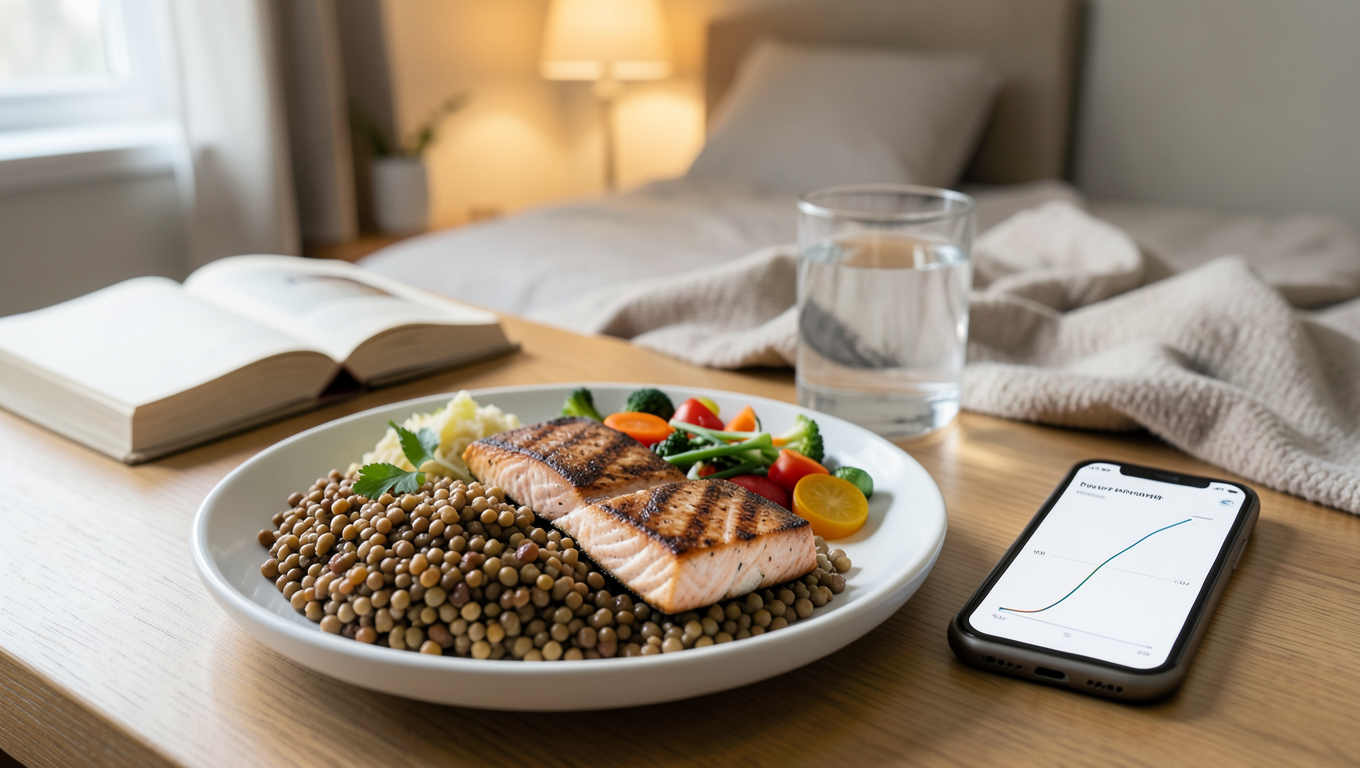 A practical plan for steadier nights and better morning numbers
If your glucose looks great at bedtime but climbs overnight—or you wake up higher than you expect—you’re not alone. Overnight blood sugar is shaped by a mix of **dinner digestion, hormones, sleep quality, stress**, and (if you use them) **medication timing**. The good news is that a few consistent habits can make your nights calmer and your morning readings more predictable—without turning your evening into a complicated science project.
This guide gives you a simple, repeatable routine:
* A “spike-resistant” dinner template (slow carbs + protein + vegetables)
* Meal order and add-ons that reduce post-meal spikes
* The best timing window for dinner
* A short post-meal movement plan
* The ideal pre-sleep routine to protect insulin sensitivity
* Smart bedtime snack strategies (only when appropriate)
* How to use CGM/fingersticks to troubleshoot dawn highs vs late-dinner spikes
> **Medical note:** If you use insulin or glucose-lowering meds, changes in meal timing, activity, or bedtime snacks can increase hypoglycemia risk. Use your CGM/meter and coordinate dose changes with your care team.
—
## Why Overnight Blood Sugar Gets Unstable
Before the routine, it helps to understand the main drivers behind nighttime highs.
### 1) Digestion is still happening while you sleep
If dinner is late—or heavy in fat—glucose may rise hours after you’ve gone to bed. This is especially common with:
* pizza, fried foods, creamy sauces
* large portions of nuts/cheese
* desserts after dinner
* “second dinner” bedtime snacking
### 2) Insulin sensitivity changes at night
Your body’s response to insulin can shift overnight. For some people, the early morning hours are a “lull” in insulin effectiveness, which can contribute to higher numbers before wake-up.
### 3) Dawn hormones push glucose up
Between roughly **3–8 a.m.**, hormones like cortisol and growth hormone can signal the liver to release glucose. This “dawn phenomenon” can raise morning readings even if you didn’t eat.
### 4) Sleep and stress amplify everything
One poor night of sleep can raise cortisol, worsen insulin resistance, and increase next-day spikes. Stress has a similar effect.
That’s why the best overnight routine tackles three pillars:
1. **Dinner composition and timing**
2. **Post-meal glucose cleanup** (movement + sequencing)
3. **Pre-sleep downshift** (sleep + stress routine)
—
# Part 1: The Best Dinner Template for Stable Overnight Glucose
A “blood-sugar-stable” dinner doesn’t have to be low-carb or boring. It just needs the right structure.
## The Overnight-Stability Plate
Aim for:
* **Slow-digesting carbs** (optional, portion-controlled)
* **25–40 grams of protein**
* **Color-dense vegetables** (fiber + volume)
* **Moderate fats** (enough for satisfaction, not a “fat bomb”)
This trio—slow carbs + protein + vegetables—reduces spikes and keeps you full so you’re less likely to snack later.
### Best slow carbs for night stability
* lentils, chickpeas, beans
* barley
* oats/oat bran (more common at breakfast but works)
* quinoa
* **resistant starch** options: cooled potatoes, reheated rice
* basmati or brown rice (in modest portions)
### Why resistant starch helps some people
Cooling and reheating certain starches increases resistant starch, which behaves more like fiber—often producing a gentler glucose rise.
Try:
* cook rice, cool, reheat the next day
* potato salad (watch sugary dressings)
* small portion of slightly green banana in a smoothie with protein
### Protein options that work well at dinner
* chicken, turkey, fish, seafood
* eggs or omelets with veggies
* tofu/tempeh
* Greek yogurt as a side or sauce base
* lentils/beans (also carbs + protein)
### Vegetables to “anchor” the meal
* leafy greens (spinach, kale, arugula)
* broccoli, cauliflower, Brussels sprouts
* peppers, zucchini, mushrooms
* cucumber/tomato salad
* cabbage slaw or fermented vegetables
—
## Dinner Timing: The 3–4 Hour Rule
If you want one change that helps many people, it’s this:
**Eat dinner 3–4 hours before bed whenever possible.**
Why it works:
* digestion is mostly finished before sleep
* less overlap between glucose rise and nighttime hormone shifts
* fewer cravings for late snacks
* improved sleep quality in many people
If you currently eat late, don’t force a huge change overnight. Move dinner earlier by **30–60 minutes** for a week and build from there.
—
# Part 2: Meal Order and Add-Ons That Smooth the Curve
## 1) Meal sequencing: vegetables first, carbs last
The order you eat foods can change the glucose curve.
Try:
1. leafy greens/vegetables first
2. protein and fats next
3. carbs last
This slows gastric emptying and can reduce the peak.
## 2) Vinegar or fermented veggies as “buffers” (optional)
Some people find a small amount of vinegar (in salad dressing or diluted in water) helps blunt the post-meal rise. Fermented vegetables like kimchi or sauerkraut can serve a similar “start with veggies” function and support gut health.
Use with caution if you have reflux, ulcers, or sensitive stomach. If it irritates you, skip it—this is optional.
—
# Part 3: The 10–15 Minute After-Dinner Walk (Your Best “Overnight Hack”)
A short walk after dinner is one of the most reliable ways to reduce post-meal glucose peaks and improve overnight patterns.
**Do this:**
* 10–15 minutes, easy pace
* start within 30–60 minutes after dinner
* consistency matters more than speed
If you can’t walk:
* light housework
* gentle cycling
* marching in place
* slow stair laps (if safe)
This movement acts like a “second dose” of insulin sensitivity by helping muscles use glucose.
—
# Part 4: The Pre-Sleep Window (Your Glycemic Intermission)
What you do in the hour before bed influences hormones that affect glucose overnight. The goal is to **lower cortisol** and support steady insulin sensitivity.
## A Simple 30–60 Minute Night Routine
Choose 3–4 of these and keep them consistent:
### 1) Dim lights
Bright light at night can disturb your circadian rhythm and sleep quality. Dim lights signals your body that it’s time to downshift.
### 2) Warm shower or bath
Warmth helps relax the nervous system and can improve sleep onset.
### 3) Nasal breathing or slow breathing
Try 3 minutes:
* inhale 4 seconds
* exhale 6 seconds
This is a quick way to reduce stress signaling.
### 4) No “stress scrolling”
Screens and stressful content raise alertness. Swap in reading, stretching, or calming audio.
### 5) Cool, dark room
Most people sleep best (and often have steadier glucose) in a cooler, darker environment.
—
# Part 5: Bedtime Snacks — When They Help vs When They Hurt
A bedtime snack can either stabilize the night or cause overnight highs. The decision depends on your pattern.
## A bedtime snack may help if:
* you tend to go low overnight
* you exercised later than usual
* you see a downward trend at bedtime
* you wake up hungry and low
## A bedtime snack may hurt if:
* your main issue is waking high
* you snack out of habit, not need
* your snack is carb-heavy without protein/fiber
* bedtime snack becomes “dessert + extra carbs”
### If you wake high: consider a protein-forward snack (experiment)
If you’re waking high from liver glucose output (common with dawn phenomenon), some people do better with a small protein-focused snack that doesn’t provoke a glucose spike.
Options:
* Greek yogurt (unsweetened)
* cottage cheese
* chia pudding
* a few nuts + small protein
Optional add-ons: cinnamon or cocoa (for flavor, not magic)
Keep the snack small and test it for 3–5 nights. If morning glucose improves and overnight stays stable, it may be a good tool for you. If it raises overnight glucose, remove it.
—
# Part 6: Hydration Without Nighttime Bathroom Trips
Hydration affects glucose (dehydration can worsen readings), but over-drinking late can disrupt sleep.
Try:
* steady fluids earlier in the day
* sip with dinner
* limit large water intake in the final hour before bed if it wakes you up
—
# Part 7: Use Your CGM or Meter Like a Night Coach
If you have a CGM, a quick glance at your trend can help you decide whether to:
* take a short walk
* skip a snack
* choose a calming routine
* avoid an unnecessary correction
## What to look for
* Is glucose rising fast after dinner?
→ walk, reduce carb portion next time, change meal order
* Is glucose stable but rising at 3–6 a.m.?
→ possible dawn phenomenon; focus on sleep/stress/dinner timing and discuss basal needs if insulin user
* Is glucose dropping low overnight then rebounding high?
→ possible rebound; discuss medication timing with your team and avoid aggressive bedtime corrections
## No CGM? Use structured checks for 3 nights
* bedtime glucose
* 2–3 a.m. glucose
* morning glucose
This small dataset can reveal whether your issue is dinner digestion, dawn phenomenon, or overnight lows.
—
# Putting It All Together: The Best Dinner + Bedtime Routine (Step-by-Step)
## The “Stable Night” Routine
**3–4 hours before bed**
* Eat dinner built around: vegetables + 25–40g protein + slow carbs (optional)
* Start dinner with vegetables or salad
**0–60 minutes after dinner**
* 10–15 minute walk
**60–90 minutes before bed**
* avoid sugary snacks
* if needed, choose a small protein-forward snack (only if your pattern supports it)
**30–60 minutes before bed**
* dim lights
* warm shower
* 3 minutes nasal breathing
* screen-free downshift
**At bedtime**
* cool, dark room
* check CGM trend (if available)
* don’t “panic snack”—confirm lows before treating when possible
—
# Example Dinners That Often Produce Stable Nights
### Option 1: Lentil bowl
* lentils + grilled chicken/tofu
* big salad or sautéed greens
* olive oil + lemon dressing
* berries for dessert (small)
### Option 2: Fish and vegetables
* salmon + roasted broccoli/cauliflower
* small portion cooled/reheated rice or new potatoes
* vinegar-based salad
### Option 3: Eggs (fast and effective)
* veggie omelet
* side salad
* small slice whole-grain bread (if desired)
### Option 4: Mediterranean plate
* Greek salad (cucumber, tomato, feta)
* grilled chicken
* chickpeas or hummus portion
* optional: small portion of fruit
—
# Troubleshooting: If You Still Wake Up High
If mornings are still high after 1–2 weeks, your next step is to diagnose the pattern:
### Scenario A: Rise starts 3–6 a.m. (no earlier spike)
Likely dawn phenomenon:
* tighten sleep routine
* reduce late stress
* earlier dinner
* discuss basal needs if insulin user
### Scenario B: Rise begins 2–5 hours after dinner
Likely meal digestion:
* reduce dinner fat load
* reduce carb portion
* walk after dinner
* avoid bedtime snacks
### Scenario C: Overnight low then rebound high
Possible rebound:
* confirm lows
* review bedtime corrections and evening insulin
* talk to your team about basal timing/dose
* use snacks strategically only when trending low
—
## Final Takeaway
Overnight glucose doesn’t need a complicated plan. It needs a consistent routine built on three pillars:
1. **Dinner structure:** slow carbs (optional), 25–40g protein, lots of vegetables
2. **Post-meal cleanup:** meal order + 10–15 minute walk
3. **Pre-sleep downshift:** dim lights, warm shower, nasal breathing, cool room
If you wake high, don’t guess. Use 3–5 nights of CGM traces (or 2–3 a.m. checks) to identify whether your issue is dawn hormones, delayed digestion, or rebound lows. Then adjust one variable at a time—patterns, not panic.